
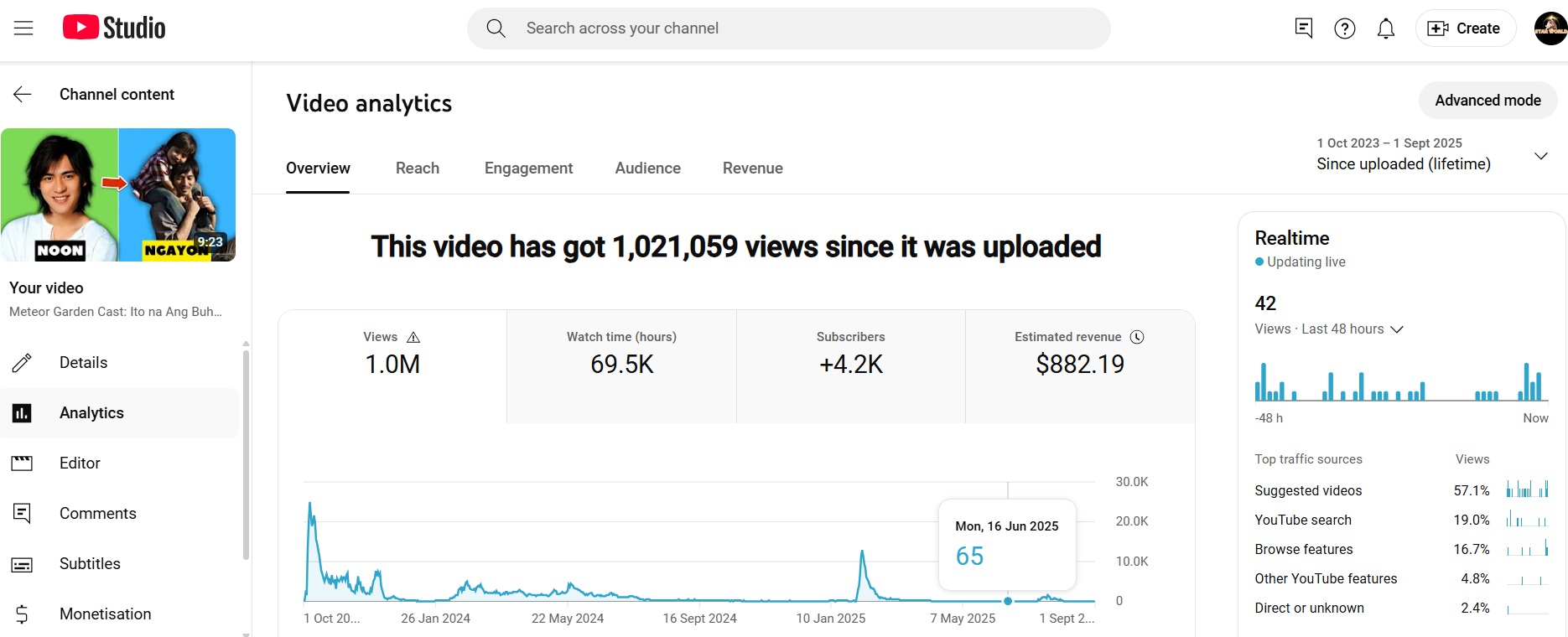
When I uploaded my second video, it unexpectedly went viral—crossing over 1 million views. At first, this channel was only a test to see if the niche had potential. The result proved that the “Then and Now” format works, especially when focused on TV series and movie casts. People love nostalgia, and they want to know what happened to their favorite stars. Here’s the exact step-by-step blueprint you can follow to build your own faceless YouTube channel and grow fast.
“From just one video, I earned $882.90 (around ₱45,000) and gained over 4,000 new subscribers. With this faceless style, you only need about three months of consistent uploads to start seeing results like this.”
Step 1: Choosing the Best Topic
Your channel’s success starts with topic selection. The key is nostalgia + curiosity. Pick shows or movies that were once very popular, with casts people still remember but haven’t seen in a while. The bigger the fan base, the higher the chance of viral reach.
Think back to the shows of your time. What were people obsessed with? What characters defined an era? That’s your goldmine.
Here are some suggestions to start with:
- Mighty Morphin Power Rangers
- Apocalypto 2006
- Kung Fu Hustle 2004
- Mara Clara (PH)
- Tabing Ilog (PH)
- Marimar 1994
- Mula Sa Puso (PH)
- Oki Doki Doc 1993
- Meteor Garden (TW)
- Full House (KR)
- Hana Yori Dango (JP)
- Boys Over Flowers (KR)
- Encantadia (PH)
- Mulawin (PH)
Choose one show or movie from this list and use it as your main video topic, and there are many more.
Step 2: Research the Cast Quickly
Researching each cast member used to take hours, but now you can use ChatGPT. All you need to do is create a strong prompt.
Example prompt:
“My YouTube channel is about TV series and movie cast, where are they now? My topic is Full House 2024 Cast. Cover all the casts and write about their role and their latest life in 2025. Write a short introduction first and include a short outro. Write in Tagalog that is easy to understand.”
This way, you instantly get a ready-to-use script. You can adjust the language, add details, or cut it down depending on your style.
Step 3: Voiceover Creation
Once you have the script, it’s time to record the voiceover. You have two options:
-
DIY Voiceover — Record using your phone. Just find a quiet room and use free software like Audacity to clean the audio.
-
AI Voiceover — If you want professional-sounding voices, use AI platforms like:
Both platforms are excellent. I personally use them and buy credits to generate high-quality voiceovers. If you want more natural and multilingual voices, ElevenLabs is the better choice.
Step 4: Video Editing
Now combine everything into a polished video. Don’t overcomplicate—clarity matters more than fancy effects.
-
Video Editor Options: Filmora (my choice), CapCut, or any editor you’re comfortable with.
-
Clips & Images: Download short clips of the series from YouTube or other platforms, and mix them with cast images. Use both video snippets and still photos to keep the audience engaged.
You can study this video I created as an example:
Step 5: Thumbnails & Titles
Thumbnails and titles are what get people to click.
-
Title Ideas:
-
“Friends Cast 2025 | Where Are They Now?”
-
“From 1994 to 2025: Power Rangers Cast Real Lives Today”
-
“Meteor Garden Then and Now (2025)”
-
-
Thumbnail Formula:
-
Split screen of THEN vs NOW
-
Year text (199X → 2025)
-
2–3 faces max, high contrast
-
“Follow the same thumbnail and title style I used in the sample video, since that format has proven to be the best-performing for this type of content.”
Step 6: Upload & SEO
-
Add timestamps for each actor.
-
Use keywords in the description like “where are they now,” “then and now,” “[show] cast updates.”
-
Add hashtags: #ThenAndNow #WhereAreTheyNow #[ShowName]
Pinned comment idea:
“Which show should I cover next? Comment your request below ⬇️”
This encourages interaction and boosts engagement.
Step 7: Stay Consistent
Don’t stop after one viral video. Post at least two videos per week. Rotate between international shows (US, JP, KR, TW) and local shows (PH). This way, you can grow different audiences at once.
Watch your analytics closely:
-
CTR (click-through rate) → If below 5%, change thumbnail or title.
-
AVD (average view duration) → Aim for 40%+. If people drop too early, tighten your script.
-
Top comments → Use them to pick your next topic.
The Key Formula
This entire blueprint boils down to three things:
-
Nostalgia → Pick shows/movies people loved.
-
Curiosity → Show “Then vs Now” transformations.
-
Consistency → Keep uploading, keep improving.
People click because they want to know: Where are my favorite stars today? Your job is to give them that answer in a clear, engaging video.
Final Words
I started this as a test, but my second video proved the niche’s massive potential. With the right blueprint—topic, script, voiceover, editing, and thumbnails—you can build a faceless YouTube channel that scales. Whether you use your own voice or AI, whether you edit in Filmora or CapCut, the goal is the same: give the audience the information they crave.
Follow this system, improve a little with every upload, and the results will speak for themselves—just like they did for me.
Last modified: September 2, 2025